1. Environmental protection and climate change assessment This course serves as a theoretical tool to countries with unconsolidated administrative systems from an environmental standpoint. The course is a guide to the knowledge of a number of different related issues, which encompasses the de facto tools and the expertise that the CUFA has developed over time, given the specialist technical component that has […] Read more »
2. Best practices for the implementation of an integrated project for the environmental restoration of fire-affected areas This course includes both theoretical lessons and practical activities aimed at the presentation, study and acquisition of technical skills for the planning and implementation of an integrated project for the environmental restoration of areas covered by fire. In particular, some periods of theoretical activities will be dedicated to the study of the peculiarities and dynamics […] Read more »
3. Protection, management and rehabilitation of priority habitats at high risk of disappearance This programme includes both theoretical and practical sessions. Some training sessions will be dedicated to the study of the protected habitat, the actions to undertake for the protection of dunal habitats in all fields, as well as complex and critical systems so as to prevent coastal erosion and mitigate the effects of climate change. There […] Read more »
4. Best practices for environmental conservation and the development of eco-friendly (sustainable) economic activities in protected areas Network of protected natural areas, as a source of good practices on environmental conservation and as a stimulus to increase the dialogue with local communities for the development of economic environmentally friendly activities This course aims to provide management tools for human phenomena in relation to the multi-disciplinary structure deriving from the interaction between natural […] Read more »
5. Soil loss and naturalistic engineering. Interventions of regulation, consolidation, defence and restoration This course includes theoretical lessons aimed at framing the problems and the recognition of the main causes and dynamics of hydrogeological instability and habitat destruction. In this context, there is the technical discipline for the naturalistic restoration, recovery and prevention of disturbances, landslide slopes, areas in erosion and degraded habitats, with reference to the history […] Read more »
6. Protection and conservation of biodiversity: heritage for life, development and health This course will be structured in frontal, participatory and outdoor training lessons and also be carried out with the evaluation and “peer to peer” processing method and with final group essays. Participants will be able to relate and assess the existing situation in the reality in which they operate with the main legislative and regulatory […] Read more »
7. Monitoring the impact of air pollution on terrestrial ecosystems: the CON.ECO.FOR. and NEC networks This course aims to provide cognitive tools, to be useful for effective monitoring of the health status of forest ecosystems. The purpose is to share the historical evolution of forest ecosystem monitoring since the Convention on Long-Range Transboundary Air Pollution (CLRTAP), signed in 1979 in Geneva. This convention has led to the development of International […] Read more »
8. The National Inventory of Forests Sand Carbon Tanks (INFC): the Italian experience of periodic of forest resources and the stock of CO2 absorbed This course aims to share the historical path that has led today to the creation of the third Inventory of Forests and Carbon Tanks in Italy (INFC2015) starting from the first Italian Forest Inventory (IFNI85). The monitoring of forest ecosystems is consistent with and effective in the achievement of the strategic objectives identified in the […] Read more »
9. Climate neutrality of field activities: strategies to reduce CO2 emissions The aim of this training will be to illustrate the international situation on the policies adopted by the main organisations involved in international scenarios, such as UN, NATO and EU, especially in “field missions”. This will be achieved through the application of similar methods and standards for the management of issues related to climate neutrality […] Read more »
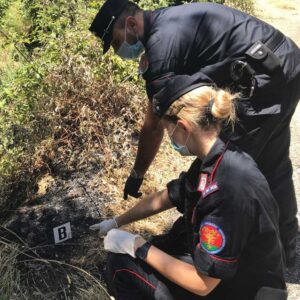
10. Forest fires. Techniques of scientific technical collection on topsoil crossed by fires for the detection of the causes of ignition. Basic Course This programme has been planned to provide learners with the scientific technical methodology necessary to carry out the collection activities on forest topsoil hit by fire, aimed at identifying, in an objective and scientific way, the potential outbreak of a fire (ignition) and the cause of the fire event to be investigated. The methodology in […] Read more »